
The Corn's Hidden Order
Children of the CornThis thread follows the corn's shift from threatening landscape to shelter and then to a supernatural force that directs Burt toward the clearing.
increasing Bearing strength in each event
 decreasing
Bearing strength in each eventdecreasingThe Rows as a Threat
The Rows as a Threat
A landscape without witnesses
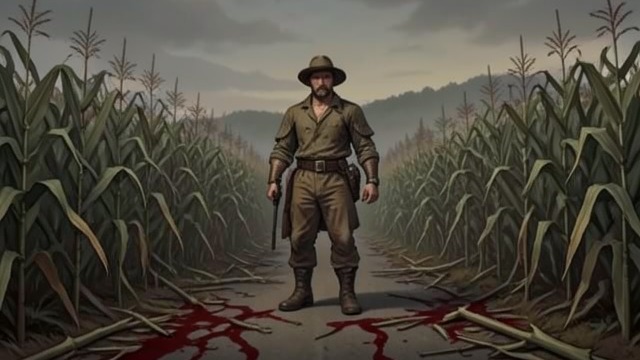
After Burt finds the boy’s body, the man-high corn surrounds the road so completely that a person could vanish within it. Broken stalks and streaks of blood indicate that the field has already concealed a struggle, while its quiet rustling offers no answer about who is present.
The unseen audience
Burt feels watched as he retrieves the boy’s suitcase. The sensation is new to him, but the rows give it a plausible shape: people could be concealed a few steps from the road, deciding whether he and Vicky are dangerous or vulnerable.
The corn therefore functions first as cover for human violence. It separates the travelers from visibility and turns an open highway into an exposed corridor through a hidden world. Burt’s fear is grounded in what he has seen, even though he cannot yet tell whether the threat comes only from people.
A Green Shelter
A Green Shelter
Flight from the streets
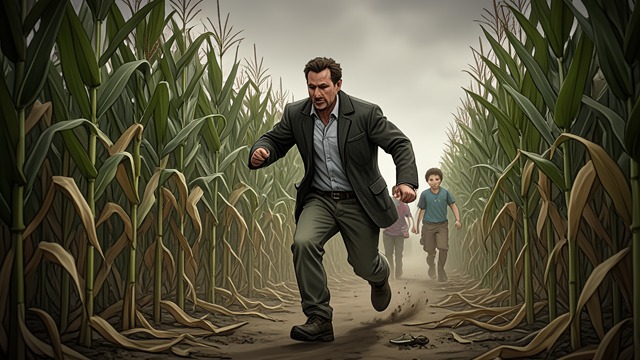
After a child wounds his arm and the others attack the car, Burt runs from town with the children pursuing him. He leaves his shoes behind and plunges into the corn, using the dense rows to break their view of him and complicate their pursuit.
Fear gives way to relief
Inside the field, Burt unexpectedly feels a second wind. He moves between rows and doubles back rather than following a straight course, while the corn’s depth and cover give him a chance to escape the open streets.
The same landscape that had seemed to conceal the boy’s killers now protects Burt from the children. That reversal unsettles the simple distinction between safe and dangerous spaces. He cannot know whether the relief is only the physical benefit of concealment or a sign that the corn itself is shaping his experience.
Strength Among the Rows
Strength Among the Rows
The chase recedes
Burt pauses to catch his breath and hears the children searching nearby. Their scattered calls and complaints suggest that they are poorly organized in the field, and their voices gradually grow less distinct as he keeps moving.
An unsettling improvement
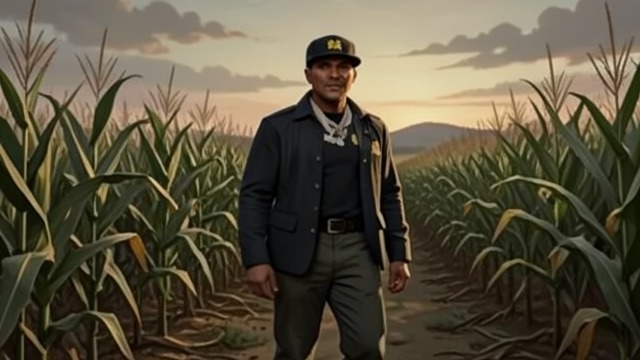
Despite his wound and exhaustion, Burt begins to feel physically better than he has in years. He recognizes that this response is strange: he is injured, his wife has been taken, and he is in mortal danger, yet the corn seems to soothe and energize him.
Burt briefly accepts the feeling without guilt, treating the urgent pursuit as a clearer problem than the failing marriage he had left behind. That emotional relief is part of the field’s power over him, whether psychological or supernatural. The corn shelters his body while also changing how he experiences the crisis.
A Field Without Weeds
A Field Without Weeds
The missing signs of nature
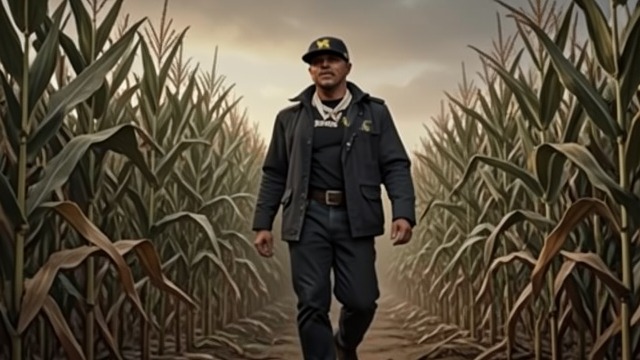
As Burt searches for a way back to the highway, he notices that the corn rustles even though the wind has died. He also sees that the plants are unusually perfect: there are no damaged leaves, insects, crows, or weeds among them.
Order beyond cultivation
The absence of ordinary disorder makes the field feel less like farmland than a maintained territory. Burt has spent much of the afternoon navigating rows that should contain the random signs of growth and decay, but the corn appears untouched by the forces that normally complicate a crop.
This discovery changes his understanding of the landscape. The corn is no longer merely an effective hiding place or an emblem of the town’s religion; it appears to possess an unnatural order. Burt realizes that the path he thought would lead him back toward the road may instead be drawing him toward a particular destination.
The Path to the Clearing
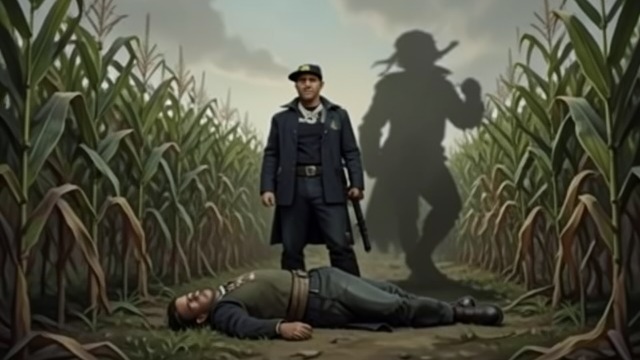
The Path to the Clearing
A route that seems chosen
Burt follows the rustling and finds that the rows open onto a bare clearing. The direction feels strangely natural, as though he has been guided there despite believing that he was navigating back toward Route 17.
The field reveals its purpose
Inside the clearing, Burt discovers Vicky’s body and the remains of earlier victims, including a former minister and a police chief. The rows then close off the way he entered, and something huge approaches through the corn. Burt recognizes the arrival as the presence named in the town’s belief: He Who Walks Behind the Rows.
The landscape’s hidden order culminates in the clearing, where the corn serves as a sacred enclosure for sacrifice rather than a route to safety. Burt’s earlier relief and confidence in the field are overturned by the realization that the same force that sheltered him has led him to its chosen place. The corn has not merely concealed the violence; it has directed it.
At the roadside, just after the collision
After Burt escapes Gatlin and enters the fields
During Burt’s first hours hiding in the corn
Near sunset, after Burt has wandered for hours
At dusk, after Burt notices the windless rustling
